Introduction
In nursing practice and education, the word "format" refers to a standardised structure or template used to document, communicate, plan, or present clinical information. Nursing formats are not just administrative tools — they are essential frameworks that ensure consistency, accuracy, and professionalism in patient care and academic work.
From writing a nursing care plan to documenting a patient handover, every nursing activity has a recommended format. Understanding these formats is critical for nursing students, educators, and practising nurses alike.
This article explains the meaning of nursing formats and provides a comprehensive overview of the most important types used in nursing practice and education in India.
What Is a Nursing Format?
A nursing format is a pre-defined structure or layout that guides how clinical, academic, or administrative information should be organised and presented. It ensures that:
- All essential information is captured consistently
- Communication between healthcare team members is clear and complete
- Documentation meets legal, professional, and institutional standards
- Students and educators follow a uniform approach to learning and assessment
Nursing formats are used across a wide range of activities — from patient assessment and care planning to lesson delivery and examination preparation.
Types of Nursing Formats
1. Nursing Care Plan Format
The nursing care plan is one of the most fundamental formats in nursing. It provides a structured approach to individualised patient care based on the nursing process (ADPIE).
Standard nursing care plan format includes:
- Patient details (name, age, diagnosis, ward)
- Nursing Diagnosis (using NANDA-I framework)
- Goals / Expected Outcomes (SMART goals)
- Nursing Interventions (independent, dependent, collaborative)
- Rationale (evidence-based justification for each intervention)
- Evaluation (outcome assessment)
Used by: Nursing students in clinical postings, staff nurses in hospitals, nursing educators for assessment.
2. SOAP Note Format
SOAP is a widely used clinical documentation format that structures patient information into four components:
- S — Subjective: What the patient reports (symptoms, complaints, history)
- O — Objective: What the nurse observes and measures (vital signs, physical findings, lab results)
- A — Assessment: Clinical interpretation of subjective and objective data (nursing/medical diagnosis)
- P — Plan: Planned interventions and next steps
Used by: Nurses and healthcare professionals for patient progress notes, clinical documentation, and handover records.
3. SBAR Format (Situation, Background, Assessment, Recommendation)
SBAR is a structured communication format used during patient handovers, referrals, and emergency situations. It ensures critical information is communicated clearly and concisely.
- S — Situation: What is happening right now? ("Patient is experiencing chest pain")
- B — Background: Relevant clinical history and context
- A — Assessment: Your clinical assessment of the problem
- R — Recommendation: What action you are requesting or recommending
Used by: Nurses during shift handovers, when escalating concerns to doctors, and in emergency situations.
4. Lesson Plan Format
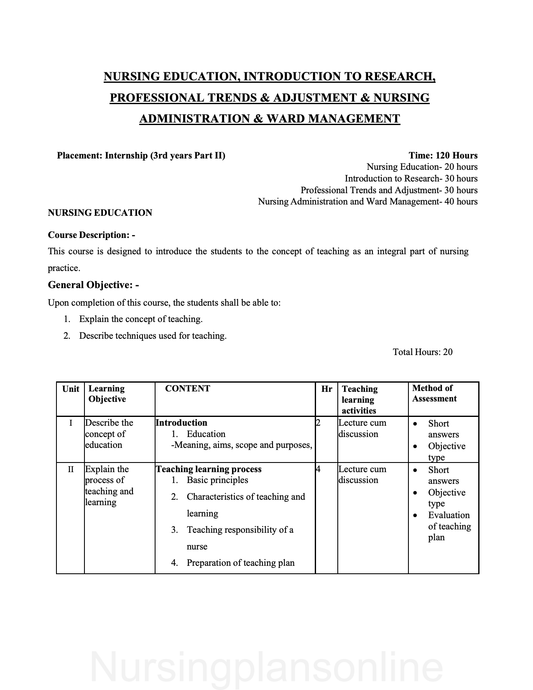
A lesson plan format is used by nursing educators to structure their teaching sessions. It ensures that every class is well-organised, objective-driven, and pedagogically sound.
Standard nursing lesson plan format includes:
- Subject, topic, and date
- Class/group details and duration
- Learning objectives (what students will know/do by the end)
- Teaching aids and materials
- Introduction / set induction
- Presentation (step-by-step content delivery)
- Application / student activities
- Evaluation / assessment
- Assignment or follow-up
Used by: Nursing faculty, clinical instructors, and nursing tutors for theory and practical classes.
5. Unit Plan Format
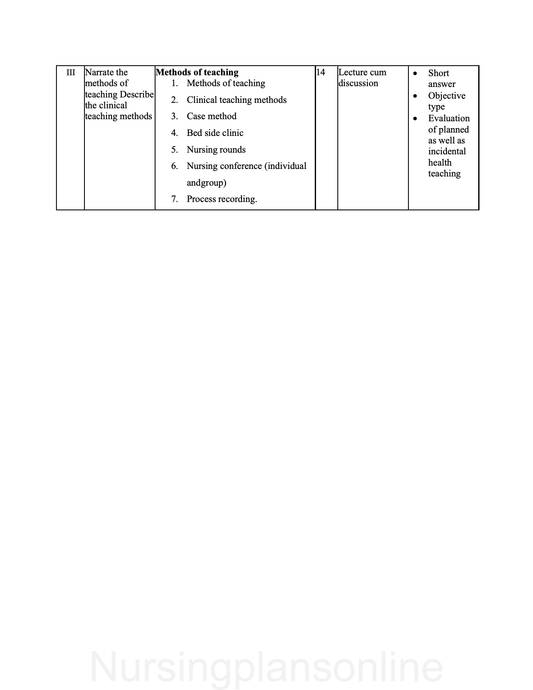
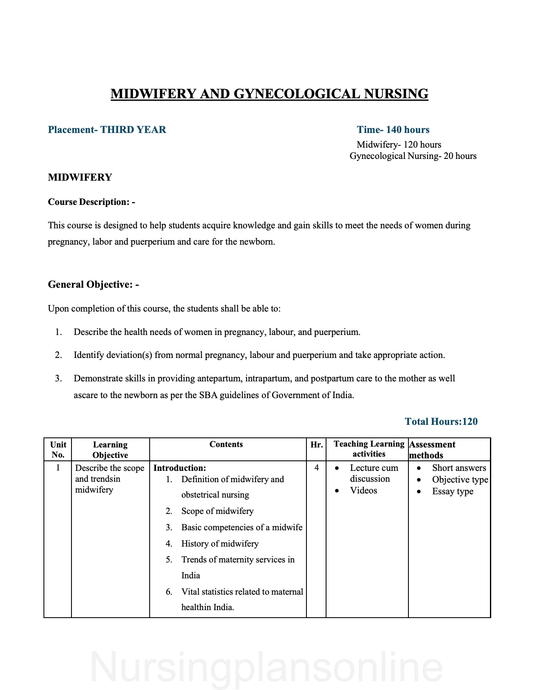
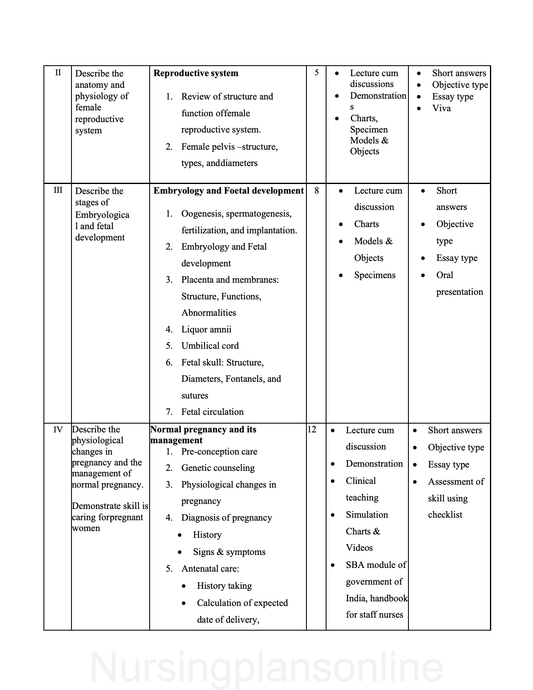
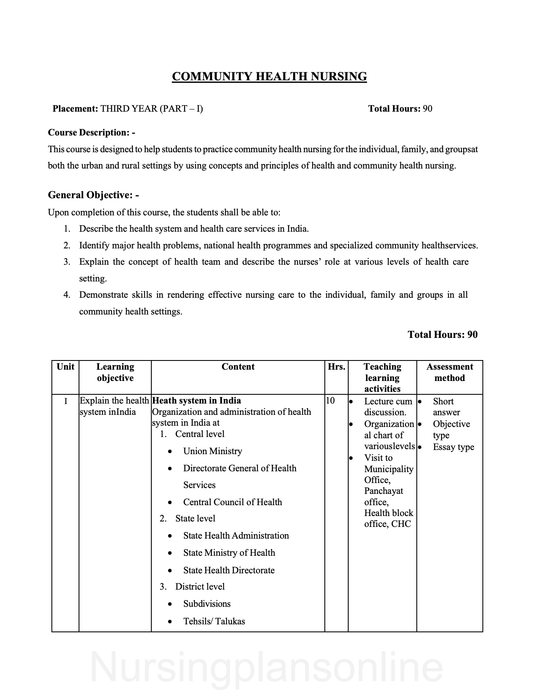
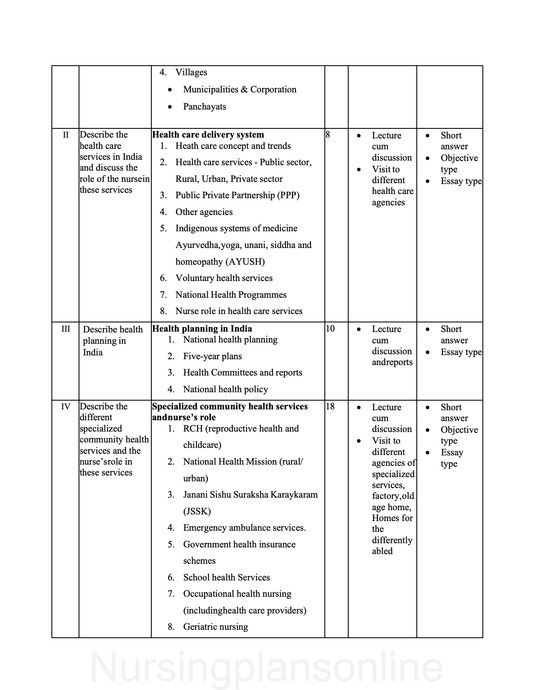
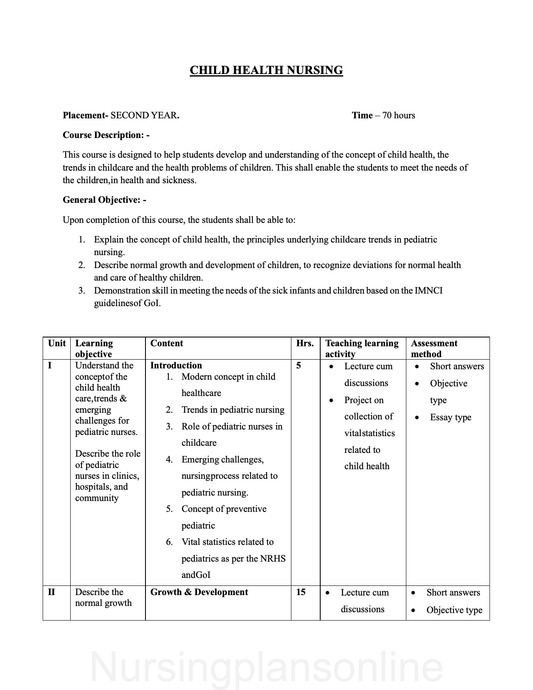
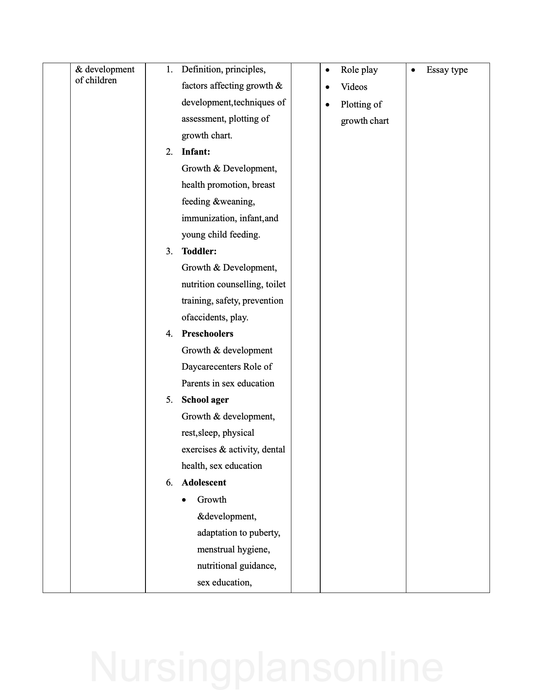
A unit plan is a broader teaching format that covers an entire unit or chapter over multiple sessions. It maps out the sequence of lessons, learning objectives, and assessments for a complete topic.
Standard unit plan format includes:
- Unit title and subject
- Duration (number of weeks/sessions)
- Unit-level learning objectives
- Session-by-session breakdown (topics, methods, duration)
- Teaching resources and aids
- Assessment plan (formative and summative)
Used by: Nursing educators for semester planning and curriculum delivery.
6. Case Study Format
A nursing case study format is used to present and analyse a real or simulated patient scenario. It develops clinical reasoning and problem-solving skills.
Standard nursing case study format includes:
- Patient profile (age, gender, presenting complaint)
- History of present illness
- Past medical and surgical history
- Physical examination findings
- Investigations and results
- Medical and nursing diagnosis
- Nursing care plan
- Nursing interventions and rationale
- Patient education
- Evaluation and discharge planning
Used by: Nursing students for clinical assignments, case presentations, and examinations.
7. Nursing Assessment Format
A nursing assessment format provides a systematic structure for collecting comprehensive patient data. It is the foundation of the nursing process.
Standard nursing assessment format includes:
- Biographical data (name, age, gender, occupation)
- Chief complaint and history of present illness
- Past medical, surgical, and family history
- Medication history and allergies
- Review of systems (head-to-toe assessment)
- Psychosocial and spiritual assessment
- Functional assessment (ADLs)
- Vital signs and anthropometric measurements
Used by: Nurses on patient admission, during clinical postings, and for nursing assessments in examinations.
8. Nursing Rotation Plan Format
A rotation plan format organises a student's clinical postings across different hospital departments throughout their training period.
Standard rotation plan format includes:
- Student name, programme, and year of study
- Department/ward name
- Posting dates and duration
- Learning objectives for each posting
- Clinical hours log
- Supervisor name and signature
- Evaluation remarks
Used by: Nursing colleges, clinical instructors, and students to manage and document clinical training.
9. Nursing Handover / Shift Report Format
A handover format ensures that patient information is transferred accurately between nurses at shift changes. Poor handovers are a leading cause of clinical errors.
Standard handover format includes:
- Patient name, bed number, and diagnosis
- Current condition and vital signs
- Medications administered and pending
- Procedures performed and planned
- Significant events during the shift
- Outstanding tasks and follow-up actions
Used by: All practising nurses during shift changes in hospitals and clinical settings.
10. Nursing Discharge Summary Format
A discharge summary format documents the patient's hospital stay and provides instructions for post-discharge care.
Standard discharge summary format includes:
- Patient details and admission/discharge dates
- Diagnosis (admission and final)
- Summary of treatment and procedures
- Medications on discharge
- Patient and family education provided
- Follow-up appointments and instructions
- Referrals made
Used by: Nurses and doctors at the time of patient discharge.
Why Nursing Formats Matter
Nursing formats serve several critical purposes:
- Consistency: Standardised formats ensure all nurses document and communicate in the same way, reducing errors and omissions.
- Legal protection: Accurate, structured documentation protects nurses legally in case of disputes or complaints.
- Continuity of care: Formats like SBAR and handover reports ensure seamless care across shifts and teams.
- Academic excellence: Students who master nursing formats produce higher-quality assignments, care plans, and case studies.
- Professional development: Using correct formats reflects clinical competence and professionalism.
Ready-Made Nursing Format Templates
Creating nursing formats from scratch is time-consuming. Our professionally designed nursing templates — including care plans, lesson plans, unit plans, rotation plans, and case study formats — are structured to INC standards and ready to use immediately.
👉 Browse Nursing Format Templates →
Conclusion
Nursing formats are the backbone of professional nursing practice and education. Whether you are a student writing your first care plan, an educator preparing a lesson, or a practising nurse documenting patient care, using the correct format ensures accuracy, consistency, and professionalism.
Familiarise yourself with all the key nursing formats covered in this guide — they will serve you throughout your nursing career.


